
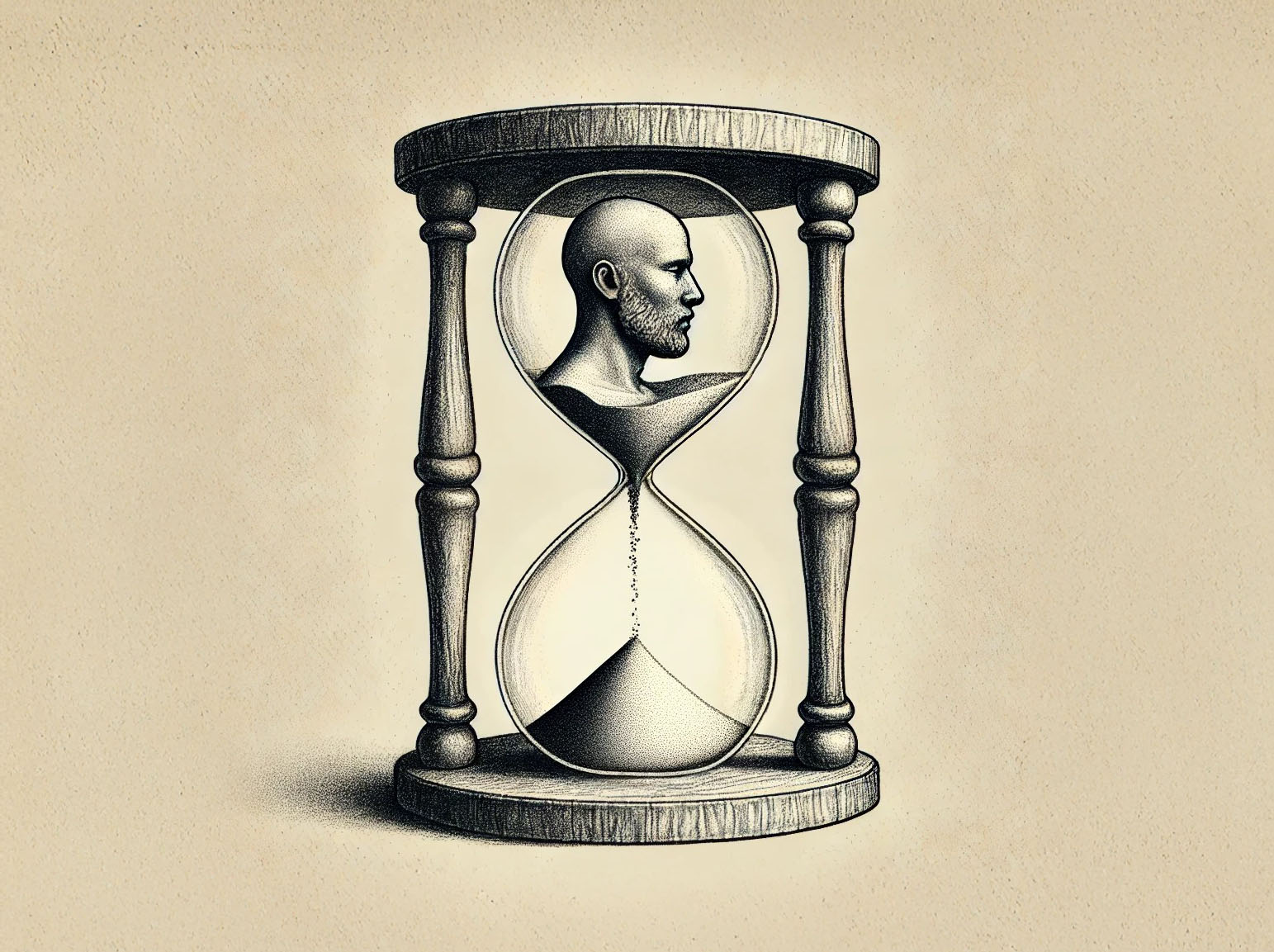
“You have to die a few times before you can really live.”
Charles Bukowski
“The question ‘Who am I?’ is not meant to be answered, but to dissolve the questioner.”
Ramana Maharshi
Being Nobody: Thoroughly Deconstructing Oneself
“Who am I?”
Part of understanding this insists we dismantle what already exists.
This means taking apart the constructs and narratives we’ve adopted in life, to uncover deeper truths about ourselves. It’s essential for growth, self-awareness, healing, and authenticity.
Leaving Home
Sometimes in life, we pack all our physical belongings and move somewhere new. During these moments it becomes stunningly obvious how much extra stuff we have – we seize the chance to purge what we’ve outgrown.
Similarly in life, we acquire, sometimes willingly sometimes not, habits, beliefs, ideas, reactions, feelings, and strategies to exist in the world. This begins in early childhood. We don’t see this while it’s happening – it’s simply a stream of lessons learned, accumulating for decades, gradually hardening how we view and engage with the world.
“Could the young but realize how soon they will become mere walking bundles of habits, they would give more heed to their conduct while in the plastic state.”
William James
“We get into the habit of living before acquiring the habit of thinking.”
Albert Camus
Unlike physically moving, however, there are sparse opportunities to purge this warehouse of the body and mind.
Sometimes a major life event might trigger us to question ourselves. Sometimes we might question ourselves when feeling lost.
Either way – discovering aspects of ourselves that no longer work is certainly liberating – to feel freed of unseen psychological baggage and make room for fresh perspective.
An Example of Becoming Nobody
Becoming nobody takes courage and discipline. It is disturbing to abandon or question the ”self” we know. It creates doubt and uncertainty – which we tend to fear. This doubt relates to our identify, meaning, and existence in general.
A word for clinging to our familiar world is “identifying”. We identify reflexively hundreds of times per day, reacting in real time based upon past experience.
This “identification” process is precisely what we can start to notice and be curious about.
An example:
“If I noticed myself slipping into identification, I would go to a coffee shop with a pad of paper and a pencil, and I would write about it. Writing about what happened actually helped me enter into the thought pattern that had triggered the reidentification. I would define exactly which thought or belief had caught me, and what the inner worldview of that thought was.
Very often we find the beliefs and ideas contained in our thinking and feeling come from our childhood. They may come from very early memories of being embarrassed or put down or shamed or terrified or angered or saddened. If we start to investigate in a meditative way, where body and mind are linked, our inquiry can start to uncover these deep inner experiences.
The more awake we become, the more that reidentification hurts. It’s like being pulled forcibly out of heaven, back into hell. When you feel like you’re in hell, you’ll do anything you can to release yourself.
So I would apply this inquiry process with great diligence. I would stick with it until I saw all the way through a moment of identification. I would know that I had gotten there when it completely released from my system.”
Adyashanti – The End of Your World
Another example:
You’ve got to dismantle yourself, eat yourself alive. How do you do that?
Get out a piece of paper. Start writing it all down.
What do I believe? Why do I believe that? Who or what put that idea into my head? Does this belief help me or hurt me? Does it limit me or set me free? Who taught me that? Why did they teach me that? What was their agenda? What was their interest in making me believe that?
Daniel Jeffries
Finding Zero
What is it like to feel the bottom of this deconstruction process? In other words, when all thoughts, feelings, beliefs, impulses, desires, aversion, are at least momentarily frozen, who ARE you in these moments?
Joseph Goldstein describes it like this:
“Ecstasy results from the wisdom of emptiness, of seeing the impermanent, insubstantial nature of all phenomena, where there is no clinging, no attachment, and no fear. In this experience, we become one with the unfolding process of life. This oneness is quite subtle, because it is the oneness of becoming zero.”
Joseph Goldstein
Who wouldn’t want to see their lives from this vantage – to be completely unencumbered by all their usual preoccupations, worries, and urges. It is from this sort of place that we can interpret and guide our lives with utter clarity.
Deconstruction In Practice
It’s simple to understand deconstruction conceptually.
To actually do so requires an ongoing practice with a blend of tools. In Adyashanti’s example, he mentions journaling, meditation, and inquiry – each of these a distinct skill that can be combined in this way.
Regardless of the tools selected, this effort unfolds for weeks, months, and years. In a way, it will carry on continuously over the course of one’s life.
Just as we might physically move several times and purge belongings each time, so too we might deconstruct and reconstruct ourselves continuously, freeing ourselves of what no longer serves us.
By discovering and purging old aspects of ourself, we make room for something new.
Returning again to Adyashanti, he suggests that by choosing to deconstruct ourselves (or not), we are making a choice:
“The choice is between inquiry and becoming a victim. That’s the choice you have—to be a victim to your own ideas and beliefs, or to feel into them until they drop away.”
Adyashanti
Leave a Reply