
Hypothesis
A relaxed DMN leads to equanimity and a feeling of presence.
A relaxed DMN supports a flexible sense of self.
Intro / Sources
The Default Mode Network (DMN) is a network in the brain, primarily comprised of the medial prefrontal cortex (mPFC) and the posterior cingulate cortex (PCC).
The DMN is associated with self referential thinking.
Source
The DMN is associated with depression and rumination.
Source
The DMN is associated with mind wandering.
Source
Mind wandering is often associated with unhappiness.
Source
The DMN is relaxed during meditation.
Sources (5)
The DMN is relaxed using psychedelics.
Source
The DMN is potentially implicated in predictive processing.
Source, Related
Practical Application
Major ways to relax the DMN:
- Meditation
- Meditation consistently reduces DMN activity, especially in the posterior cingulate cortex (PCC) and medial prefrontal cortex (mPFC).
Source
- Meditation consistently reduces DMN activity, especially in the posterior cingulate cortex (PCC) and medial prefrontal cortex (mPFC).
- Psychedelics
- Psilocybin downregulates DMN connectivity, notably between the PCC and mPFC, and is linked to ego-dissolution.
Source
- Psilocybin downregulates DMN connectivity, notably between the PCC and mPFC, and is linked to ego-dissolution.
- Flow States
- Flow reduces DMN activity and self-referential thinking by engaging task-positive networks.
Source
- Flow reduces DMN activity and self-referential thinking by engaging task-positive networks.
- Nature Exposure
- Time in natural environments modulates DMN activity and reduces rumination and internal chatter.
Source
- Time in natural environments modulates DMN activity and reduces rumination and internal chatter.
- Breathwork
- Controlled breathing influences DMN connectivity, likely by engaging parasympathetic pathways and calming self-related processing.
Source
- Controlled breathing influences DMN connectivity, likely by engaging parasympathetic pathways and calming self-related processing.
Related:
The Predictive Processing Wellbeing Hypothesis
Additional Material:
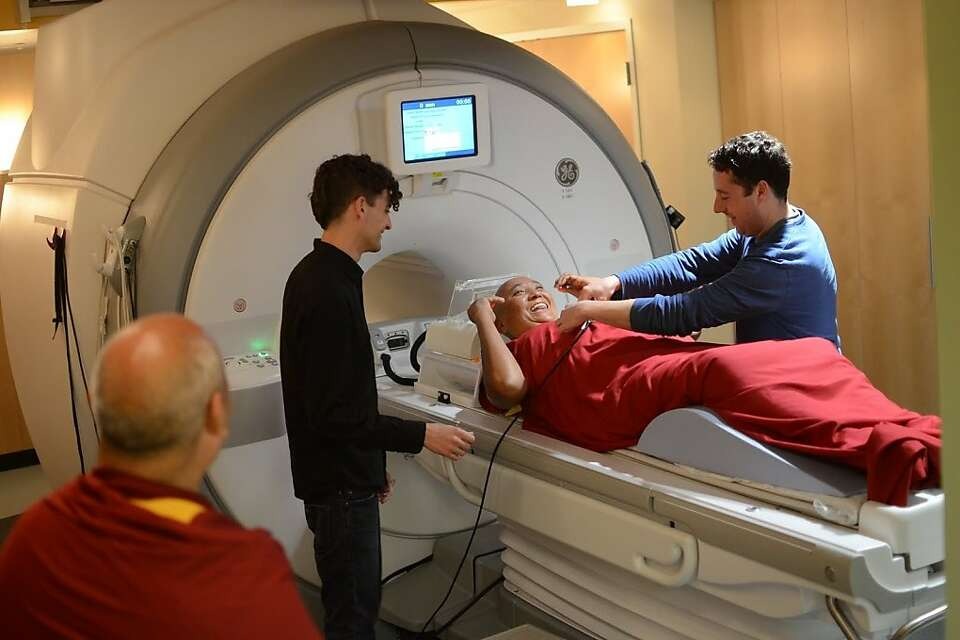
Monks in an fMRI Machine
Meditation, Psychedelics, DMN (Griffiths)
Your Brain When Doing Nothing (Raichle)
Your Brain When Doing Nothing (Psychology Today)
What Holds us Back from Mystical Experience?
Last Updated
Maintained by Jesse Starks and Josh Wagner
Last Updated: 4/1/2025