
What is life all about? A 40-hour work week until we’re (nearly) dead?
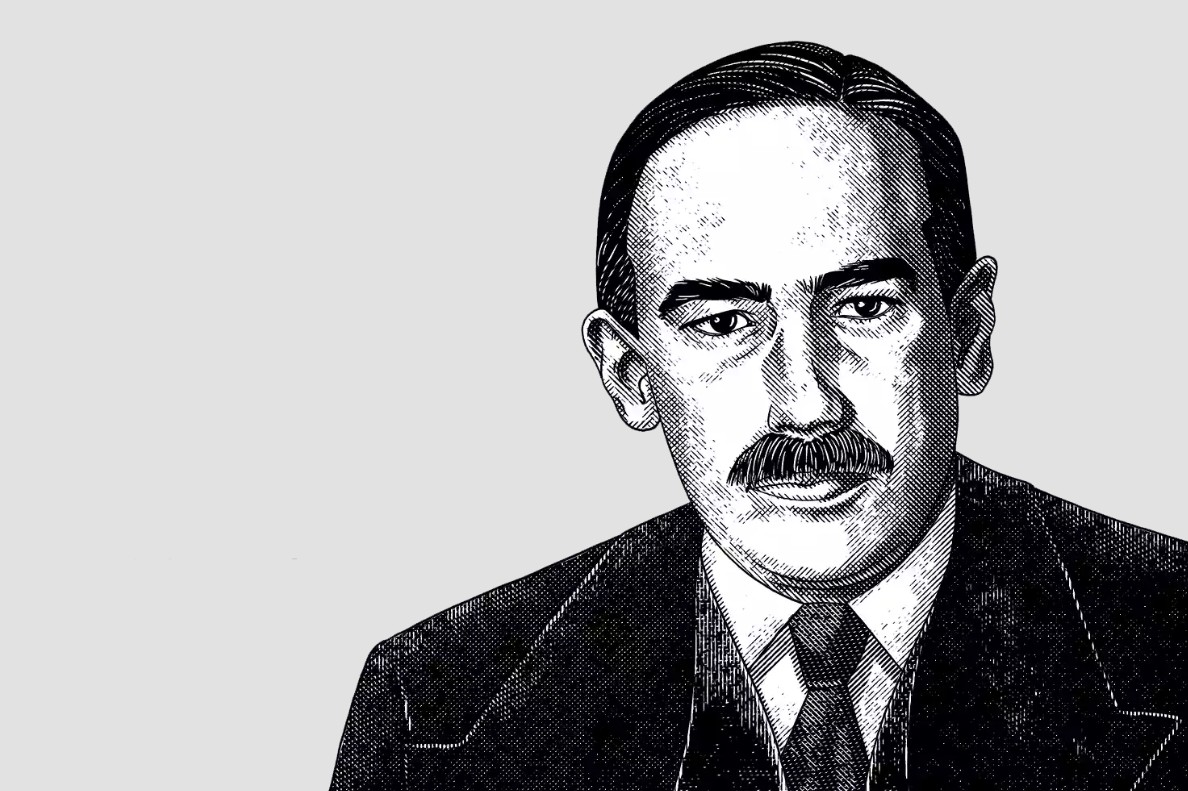
In 1930, economist John Maynard Keynes saw an advanced society on the horizon. He believed that by continuing to make progress in productivity and efficiency, we would satisfy humanity’s basic needs: food, shelter, and health – working only 15-hour weeks.
This would be a new era of:
“living wisely and agreeably and well.”
In other words, we would cut the effort required to survive. We’d be free to allocate our remaining time toward leisure and virtue.
The bad news: this vision was lost. We are not working 15-hour weeks. We may live in the age of science, technology, the internet, and efficiency – but the wisest questions about “living a good life” remain neglected.
What happened?
Keynes’s essay, Economic Possibilities for our Grandchildren, helps us think about this.
A Brief Analysis
First we can look at Keynes’s points:
1) Humans have two classes of needs. 1- “Absolute Needs” food, shelter, health, and 2- “Relative Needs” – superficial things that make us feel good.
“Now it is true that the needs of human beings may seem to be insatiable. But they fall into two classes –those needs which are absolute in the sense that we feel them whatever the situation of our fellow human beings may be, and those which are relative in the sense that we feel them only if their satisfaction lifts us above, makes us feel superior to, our fellows. Needs of the second class, those which satisfy the desire for superiority, may indeed be insatiable; for the higher the general level, the higher still are they. But this is not so true of the absolute needs-a point may soon be reached, much sooner perhaps than we are all of us aware of, when these needs are satisfied in the sense that we prefer to devote our further energies to non-economic purposes.”
2) Until the early 1900s, the biggest problem facing mankind was our “Absolute Needs” – our perpetual struggle to survive.
“If we look into the past-we find that the economic problem, the struggle for subsistence, always has been hitherto the primary, most pressing problem of the human race-not only of the human race, but of the whole of the biological kingdom from the beginnings of life in its most primitive forms.”
3) Given technological progress and abundance, the problem of “Absolute Needs” may be permanently solved.
“I draw the conclusion that, assuming no important wars and no important increase in population, the economic problem [of Absolute Needs] may be solved, or be at least within sight of solution, within a hundred years. This means that the economic problem is not-if we look into the future-the permanent problem of the human race.”
4) It will be tough for society to readjust and embrace this free time – we are so used to toiling away to survive, as a way of life.
“Will this be a benefit? If one believes at all in the real values of life, the prospect at least opens up the possibility of benefit. Yet I think with dread of the readjustment of the habits and instincts of the ordinary man, bred into him for countless generations, which he may be asked to discard within a few decades.
[…]
Thus for the first time since his creation man will be faced with his real, his permanent problem-how to use his freedom from pressing economic cares, how to occupy the leisure, which science and compound interest will have won for him, to live wisely and agreeably and well.”
5) We must be careful not to squander privilege and abundance, like the wealthy elites of that era.
“To judge from the behavior and the achievements of the wealthy classes to-day in any quarter of the world, the outlook is very depressing! For these are, so to speak, our advance guard-those who are spying out the promised land for the rest of us and pitching their camp there. For they have most of them failed disastrously, so it seems to me-those who have an independent income but no associations or duties or ties-to solve the problem which has been set them.”
6) A vision for a better way.
“I feel sure that with a little more experience we shall use the new-found bounty of nature quite differently from the way in which the rich use it to-day, and will map out for ourselves a plan of life quite otherwise than theirs.
For many ages to come the old Adam will be so strong in us that everybody will need to do some work if he is to be contented. We shall do more things for ourselves than is usual with the rich to-day, only too glad to have small duties and tasks and routines. But beyond this, we shall endeavour to spread the bread thin on the butter-to make what work there is still to be done to be as widely shared as possible. Three-hour shifts or a fifteen-hour week may put off the problem for a great while. For three hours a day is quite enough to satisfy the old Adam in most of us!
[…]
We shall be able to afford to dare to assess the money-motive at its true value. The love of money as a possession -as distinguished from the love of money as a means to the enjoyments and realities of life -will be recognised for what it is, a somewhat disgusting morbidity, one of those semi-criminal, semi-pathological propensities which one hands over with a shudder to the specialists in mental disease.
[…]
I see us free, therefore, to return to some of the most sure and certain principles of religion and traditional virtue-that avarice is a vice, that the exaction of usury is a misdemeanour, and the love of money is detestable, that those walk most truly in the paths of virtue and sane wisdom who take least thought for the morrow. We shall once more value ends above means and prefer the good to the useful. We shall honour those who can teach us how to pluck the hour and the day virtuously and well, the delightful people who are capable of taking direct enjoyment in things, the lilies of the field who toil not, neither do they spin.“
7) This vision can come to fruition, if only…
“The pace at which we can reach our destination of economic bliss will be governed by four things-our power to control population, our determination to avoid wars and civil dissensions, our willingness to entrust to science the direction of those matters which are properly the concern of science, and the rate of accumulation as fixed by the margin between our production and our consumption; of which the last will easily look after itself, given the first three.”
What Happened Since 1930?
Against Keynes’s hopes, we tend to undermine ecological science, the world has seen war and conflict, and we are depleting natural resources faster than they’re replenished.
Individually we cannot change this.
But we can reflect on certain questions in our own lives.
Has the 40-Hour Week Ever Felt Excessive?
Have you ever wondered this, even briefly? If there is any salvageable value in Keynes’s essay – it’s knowing you’re in good company. The possibility to labor less and allocate more time toward “leisure” is nearly 100 years old.
It’s natural to wonder if the 40-hour-week-till-age-65 lifestyle is the best we can do.
Two related points will be explored in future posts:
- Some American companies successfully ran 30 hour workweeks in the 1930s, but political and consumerism pressures reversed this. [ref]
- Some ancient and modern foraging societies worked approximately 20 hours per week for survival. Granted they have less, but 1) they are happy, and 2) it still raises the question whether we can better manage our abundance. [ref]
What Is The Main Reason We Work?
We all seek purpose. We seek challenge. We seek growth. We seek community. We seek fulfillment. We seek service.
But are these the main reasons we work?
At bottom – we work to survive – to provide for ourselves and our families. This is the true ancient origin of work.
Any other abstract story we attach to our jobs is somewhat illusory…
A risk of imbuing our jobs with too much extra meaning – or considering it a major part of our identity – is working unquestionably through old age and retirement, and realizing our entire life has passed us by.
On the Hedonic Treadmill?
Society entices us to crave things endlessly, and toil away to fulfill those cravings. But we can choose not to go along for the ride. Because like a treadmill, this cycle never ends.
It’s not to say work and consumption are evil. Rather, to find a middle ground. We all benefit from society, and we all need to contribute somehow. We all enjoy comforts. But we don’t have to get lost in the process… slaving over decades and losing sight of what we value most. We can save money, take part time jobs, take sabbaticals, retire early, explore various other ways to get by, or work hard on our own terms, for reasons we truly care about.
“Hard work for long hours can help a person buy lots of stuff, or careful spending decisions can help a person have lots of leisure. The choices is for each individual to make.”
Bill Conerly, reflecting on Keynes’s essay in 2020
How Would We Keep Busy?
For many, this might be the sneaky hardest obstacle of all. We’ve been conditioned to work since we were kids. What the hell would we do with all that free time? May as well keep working…
This is a complex question that really takes time to explore. Boredom and anxiety are unsettling states of mind, and work is a great antiesthetic. But is this the only way?
Think back to being a kid. What did we do when we were bored? Anything! How can we rekindle that state of curiosity and wonder again?
“Every child is an artist. The problem is how to remain an artist once we grow up.”
Pablo Picasso
This will be explored in a future post. [ref]
The Privilege of Wondering
Thinking about how we want to work is a luxury. Unfortunately some folks are so deep in debt and immediate responsibilities, continuous hard work is the only choice.
Yet even in these cases, there is glimmer on the horizon to wonder about. What are the root causes of labor demands today, and what choices we can make to relieve them, even if it takes years or decades to get there?
What is life all about?
Reflection…
Keynes’s essay raises more questions than it answers.
- At the societal level, why are decades of efficiencies gobbled up, and we seem to work just as hard (or harder) to keep up? Jevon’s paradox?
- At the personal level, what requires so much work? What are we providing? What are we fulfilling? How essential are these reasons?
- What is the history of work?
- What exactly is “leisure”?
- How the hell would society function if we all worked less?
Keynes’s did not have all the answers, he merely wanted to show it was possible to think them over the coming decades – due to our extraordinary abundance.
The Relationship of Work and Joy
For the luckiest among us, work is doing what we love even if we aren’t getting paid. Or, we may be in a phase in our career where we enjoy every ounce of work. If these cases, Keynes’s essay may not apply. However, these attitudes are highly variable over the course of one’s life. A day may come when these questions feel totally relevant.
Discussion
This has been posted to reddit for voting and discussion.
Life Beyond Work – Keynes’s 15-Hour Work Week
byu/self-investigation inSelfInvestigation